Sacagawea Dollar Value Guide: The Sacagawea dollar is one of the most fascinating coins in modern American numismatics. First introduced in 2000, it was designed to honor Sacagawea, the Shoshone woman who played a crucial role in guiding the Lewis and Clark expedition. While most Sacagawea dollars are worth only their face value, certain rare varieties and special issues have become highly valuable, with some examples fetching prices in the thousands and even millions. This guide explains the history of the Sacagawea dollar, the factors that determine its value, and the rare coins that collectors dream of finding.
The Origins of the Sacagawea Dollar
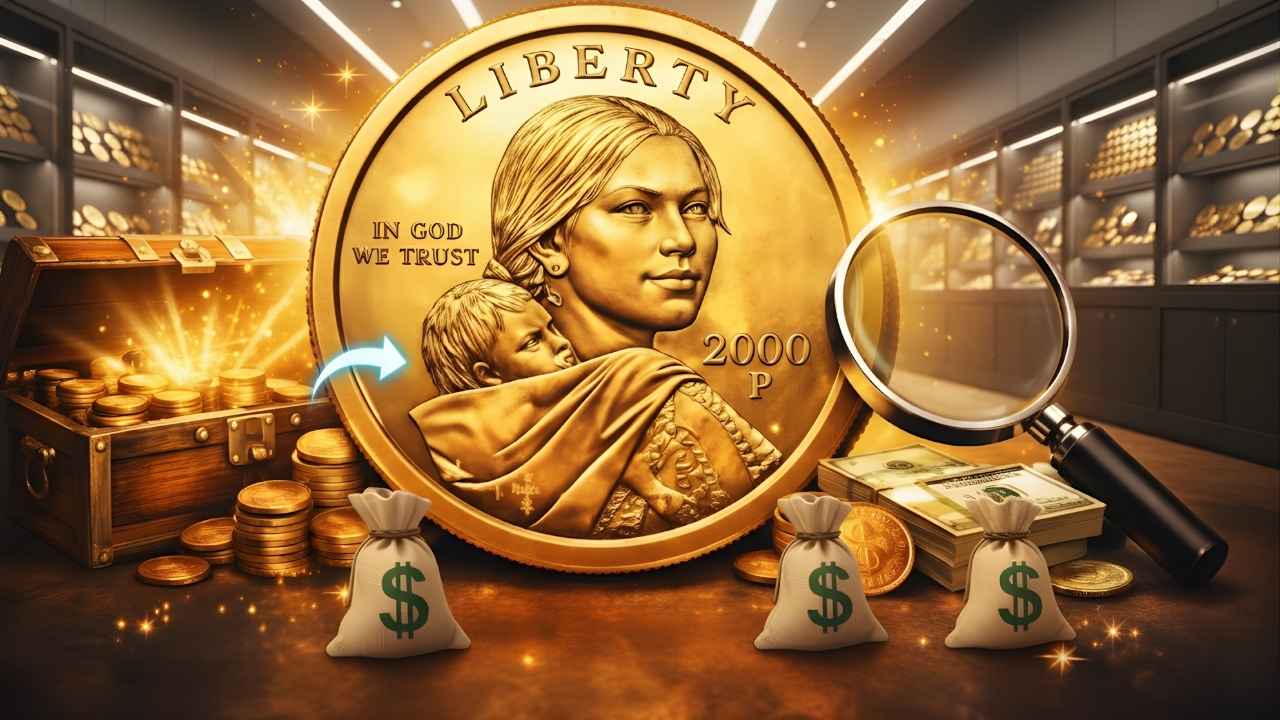
The Sacagawea dollar was created to replace the Susan B. Anthony dollar, which had been unpopular due to its similarity in size and color to the quarter. The new coin was designed with a golden appearance, achieved by using a manganese brass composition. Glenna Goodacre designed the obverse, featuring Sacagawea carrying her infant son Jean Baptiste, while the reverse depicted a soaring eagle. The coin was intended to circulate widely, but like its predecessor, it struggled to gain acceptance in everyday commerce.

Circulation and Collector Appeal
Although the Sacagawea dollar did not achieve widespread use in daily transactions, it quickly became popular among collectors. The coin’s unique design and historical significance made it appealing, and the U.S. Mint produced special proof and collector editions. Over time, certain varieties and errors emerged, creating a market for rare examples that could be worth far more than their face value.
The Cheerios Dollar
One of the most famous varieties is the so-called Cheerios dollar. In 1999, the U.S. Mint partnered with General Mills to promote the new coin by including 5,500 examples in boxes of Cheerios cereal. These coins were later discovered to have a prototype reverse design with enhanced eagle tail feathers. Because of their rarity and historical importance, Cheerios dollars are worth thousands of dollars today, with pristine examples selling for tens of thousands.
The Goodacre Presentation Dollars
Another rare variety is the Goodacre presentation dollar. Glenna Goodacre, the coin’s designer, was paid her commission in 5,000 specially struck Sacagawea dollars. These coins were produced with a unique finish and were never released into circulation. Collectors prize them for their connection to the artist and their limited mintage. Values for these coins can reach thousands of dollars depending on condition.
Minting Errors and Varieties
Minting errors often create valuable coins, and the Sacagawea dollar is no exception. Examples include double strikes, off-center strikes, and coins struck on the wrong planchet. These errors are rare and highly sought after by collectors. Depending on the type and severity of the error, values can range from hundreds to thousands of dollars. Error coins remind collectors that even modern minting processes are not immune to mistakes.
The 2000 Sacagawea Dollar Mule
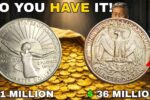
Perhaps the most famous and valuable Sacagawea dollar variety is the 2000 mule coin. A mule is a coin struck with mismatched dies, and in this case, the obverse of a Washington quarter was paired with the reverse of a Sacagawea dollar. Only a handful of these coins are known to exist, and they have sold for hundreds of thousands of dollars at auction. Some estimates suggest that if another example were discovered today, it could be worth close to a million dollars.
Proof and Special Issues
The U.S. Mint has produced proof versions of the Sacagawea dollar for collectors, featuring sharp details and mirror-like surfaces. These coins are more valuable than circulation strikes, especially in high grades. Special issues, such as coins included in annual proof sets or commemorative collections, also carry premiums. Collectors often seek complete sets of Sacagawea dollars, including both circulation and proof examples.

The Native American Dollar Series
In 2009, the Sacagawea dollar was redesigned as part of the Native American dollar series. The obverse continued to feature Sacagawea, while the reverse changed annually to highlight contributions of Native Americans to U.S. history. These coins added diversity to the series and increased collector interest. Some of the designs have become particularly popular, and limited mintages have made certain issues more valuable.
Factors That Determine Value
The value of a Sacagawea dollar depends on several factors. Rarity is the most important, with limited mintage varieties and errors commanding the highest prices. Condition also plays a critical role, as coins in pristine, uncirculated condition are worth far more than worn examples. Historical significance and collector demand further influence value. Coins tied to special promotions or unique designs often attract higher bids at auction.

Why Some Could Be Worth Millions
While most Sacagawea dollars are worth only a dollar, rare varieties such as the Cheerios dollar, Goodacre presentation coins, and especially the 2000 mule can be worth thousands or even millions. Their rarity, combined with collector demand, drives prices to extraordinary levels. For collectors, the thrill lies in the possibility of discovering one of these rare treasures in a collection or even in circulation.
Conclusion
The Sacagawea dollar is a coin that blends history, artistry, and rarity. Although it never achieved widespread use in commerce, it has become a favorite among collectors. From Cheerios dollars to mule errors, certain varieties have reached values in the thousands and even millions. The coin’s connection to Sacagawea and Native American heritage adds cultural significance, making it more than just currency. For collectors and enthusiasts, the Sacagawea dollar represents the excitement of numismatics, where even a modern coin can hold immense value. As time passes, these rare coins will continue to capture imaginations and remind us that treasures can be found in the most unexpected places.