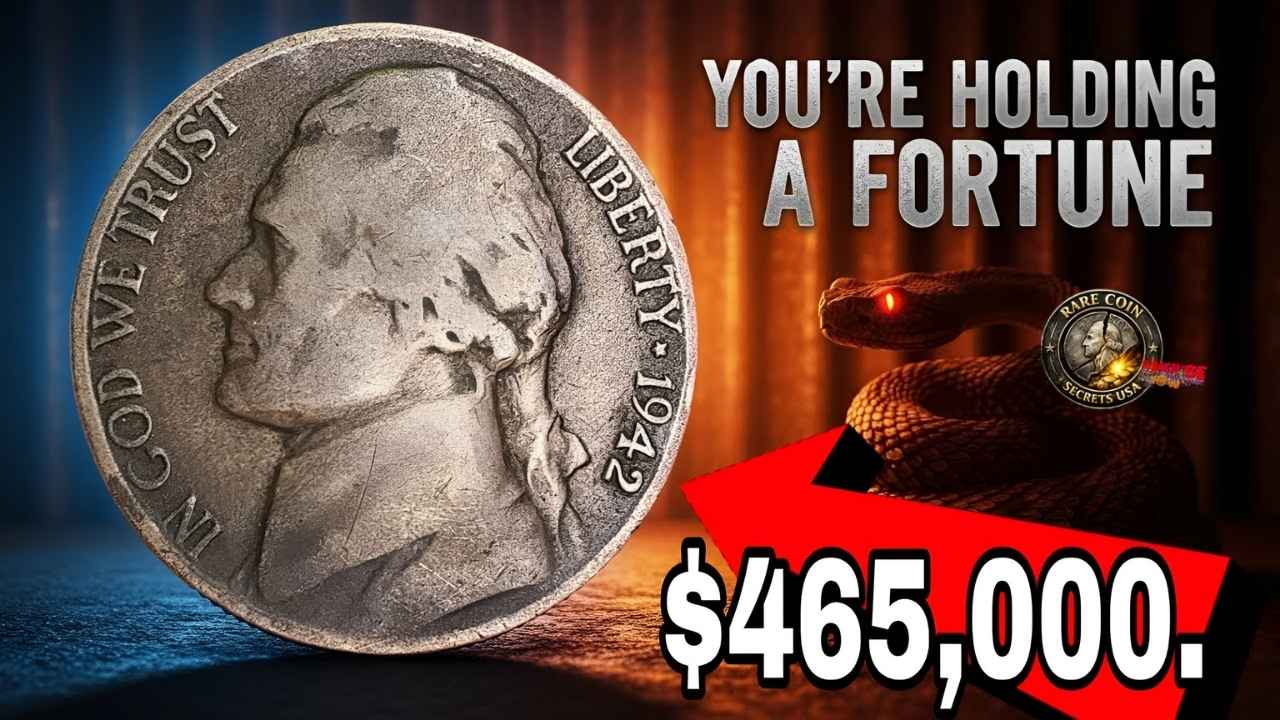
Rare War Nickels Worth a Fortune: War nickels are a fascinating chapter in American coinage history. Minted between 1942 and 1945 during World War II, these coins were created out of necessity when nickel, a critical metal for military production, was diverted to the war effort. To continue producing five-cent pieces, the U.S. Mint altered the composition of the coin, replacing nickel with a blend of copper, silver, and manganese. This change gave birth to what collectors now call “war nickels.” While most war nickels are worth only a modest premium above face value, certain rare varieties have become highly sought after, with some examples commanding small fortunes. In this article, we will explore four rare war nickels that collectors should look for, each with its own unique story and value.
The Story Behind War Nickels
The decision to change the composition of the nickel was driven by wartime needs. Nickel was essential for producing armor plating, weapons, and other military equipment. To conserve resources, the Mint introduced a new alloy consisting of 56 percent copper, 35 percent silver, and 9 percent manganese. This composition not only saved nickel for the war effort but also gave the coins a distinctive appearance.

War nickels can be identified by a large mint mark placed above the Monticello building on the reverse side. This was the first time the Mint used such prominent mint marks, making it easier to distinguish the new composition from earlier nickels.
1942-P War Nickel
The 1942-P war nickel is significant because it was the first year the new composition was introduced. While millions were minted, certain varieties are rare and valuable. Collectors prize examples in pristine condition, especially those with full details on Monticello.

The 1942-P is also notable because it marked the debut of the “P” mint mark for Philadelphia, which had never appeared on a coin before. This historical first adds to its appeal, and high-grade specimens can command impressive prices.
1943-P Doubled Die Obverse
One of the most famous error varieties among war nickels is the 1943-P doubled die obverse. This coin features noticeable doubling on the date and lettering, making it easy to identify. Error coins are always popular with collectors, and the 1943-P doubled die is no exception.

High-grade examples of this variety have sold for thousands of dollars, making it one of the most valuable war nickels. Collectors should examine their 1943-P nickels carefully, as even circulated examples of this error can be worth far more than face value.
1944-D D Over D Variety
The 1944-D war nickel includes a fascinating minting error known as the “D over D” variety. This occurs when a Denver mint mark was struck over another Denver mint mark, creating a distinctive appearance. Such errors are rare and highly collectible.
The 1944-D D over D variety is particularly valuable in mint state condition. Collectors prize it for both its rarity and its connection to wartime production. When found in pristine condition, this coin can be worth hundreds or even thousands of dollars.
1945-P War Nickel
The 1945-P war nickel is the final year of issue for the wartime composition. While many were produced, certain varieties and high-grade examples are especially valuable. Collectors often seek this coin to complete their war nickel sets, and pristine specimens can command significant premiums.

The 1945-P is also notable because it represents the end of an era. After the war, the Mint returned to the standard nickel composition, making the 1945-P a symbolic conclusion to the wartime series.
The Importance of Condition and Grading
As with all coins, condition plays a critical role in determining value. War nickels in circulated condition may be worth only a modest premium, but those in mint state can command much higher prices. Professional grading services such as PCGS and NGC provide authentication and evaluation, giving collectors confidence in the coin’s quality.
Coins with sharp details, full steps on Monticello, and minimal wear are especially prized. Rare varieties such as the 1943-P doubled die or the 1944-D D over D can be worth exponentially more when graded at the highest levels.
How to Spot Rare War Nickels
Collectors hoping to identify valuable war nickels should pay attention to several details:
- Look for the large mint mark above Monticello, which distinguishes war nickels from earlier issues.
- Examine the date and lettering for signs of doubling, especially on the 1943-P.
- Check the mint mark for unusual varieties, such as the D over D on the 1944-D.
- Consider professional grading to confirm authenticity and condition.
The Role of Auctions and Collectors
Rare war nickels often appear at major numismatic auctions, where bidding can be intense. Collectors are drawn not only by the potential financial value but also by the historical significance of the coin. Auction records show that rare varieties consistently sell for impressive sums, highlighting their enduring appeal.
Owning one of these coins is considered a milestone in coin collecting. For many enthusiasts, the pursuit of rare war nickels is not just about investment but also about preserving a piece of history.

Myths and Misconceptions
Many people believe that all war nickels are valuable, but this is not true. Millions were minted, and most are worth only a modest premium above face value. The extraordinary values are reserved for rare varieties and coins in exceptional condition.
Another misconception is that age alone determines value. While war nickels are historic, rarity and condition are far more important factors. A common circulated war nickel may be worth only a few dollars, while a rare variety in mint state can be worth hundreds or thousands.
The Future of War Nickel Collecting
As time passes, the rarity of certain war nickels will only increase. Coins that were once overlooked may gain recognition as collectors continue to study and discover new varieties. The 1943-P doubled die and 1944-D D over D will likely remain highly sought after, and their values may continue to rise.
For new collectors, war nickels offer an exciting entry point into numismatics. They are widely available, affordable in common varieties, and provide the thrill of potentially discovering a rare treasure.
Conclusion
War nickels are more than just coins. They are artifacts of history that reflect America’s wartime sacrifices and ingenuity. While most are worth only a modest premium, rare varieties such as the 1942-P, 1943-P doubled die, 1944-D D over D, and 1945-P have achieved legendary status among collectors.
In some cases, these coins have sold for amounts far exceeding their face value, proving that extraordinary wealth can sometimes be hidden in the most ordinary places. For collectors and enthusiasts, spotting these treasures requires knowledge, patience, and a keen eye for detail. The story of war nickels reminds us that hidden gems may be waiting in our pockets, ready to be discovered by those who appreciate the beauty and history of numismatics.